
"Explore NorthGuide's insights on building a Bionic Organization. Learn how to integrate human creativity with AI to thrive, innovate, and grow in the Age of AI."

Photo by Wesley Tingey on Unsplash
Co-author: Millin Gabani, Co-Founder and CEO of Keyflow
On October 7, NorthGuide’s Chief Strategy Officer, Sarah Mostowich and Keyflow CEO, Millin Gabani delivered a keynote at NorthGuide’s Global Ecosystem Summit on the next major shift in how we work: the transition to bionic organizations.
The talk explored how building bionic organizations means fundamentally rethinking how we blend human and machine strengths to improve how we operate today, and to continuously reinvent ourselves for the future.
To understand where we're going, it's helpful to see where we've been.
In 1890, the first office building in New York City, the Pulitzer Building, completed its construction and marked the dawn of a new era. Until the late 1800s, most people were engaged in manual labour. The rise of office buildings signalled a demand for a new kind of labour: Knowledge Work.

For the first time, people could earn a living using their intelligence, a capability unique to humans. This shift led to a mass migration to cities and the development of new tools—typewriters, computers, the internet, and SaaS—all designed to scale the output of knowledge work.

However, these tools brought an unintended consequence: "busywork". This is the monotonous, repetitive work that clogs our inboxes and ticket queues, distracting us from the higher-order, creative work we should be doing.
For years, we had no solution, but the advent of Large Language Models (LLMs), or AI, has promised to eliminate busywork and truly scale knowledge work.
Despite the promise, the reality of AI adoption has been underwhelming for many. A recent MIT report highlighted a staggering statistic: 95% of generative AI pilots in companies are failing.
The report points to a "GenAI Divide". Organizations are struggling because they invest in static, generic AI tools that can't adapt to their specific, intricate workflows. While consumer-grade tools like ChatGPT are popular for their flexibility, custom enterprise tools are often seen as "brittle" or "misaligned" with how people actually work. These static solutions might offer a temporary boost, but they quickly become outdated as the organization evolves.
To overcome this, organizations must become "bionic". A bionic organization is one that deliberately blends human strengths—like creativity and judgment—with machine strengths—like speed and scale. The goal is to run a business better today and continuously reinvent it.
This concept is powered by the Knowledge Work Flywheel:
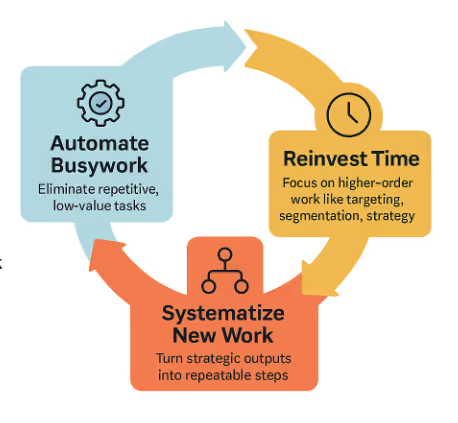
Companies that successfully implement this flywheel see dramatic increases in output volume, higher job satisfaction, and more resilient employee skill sets.
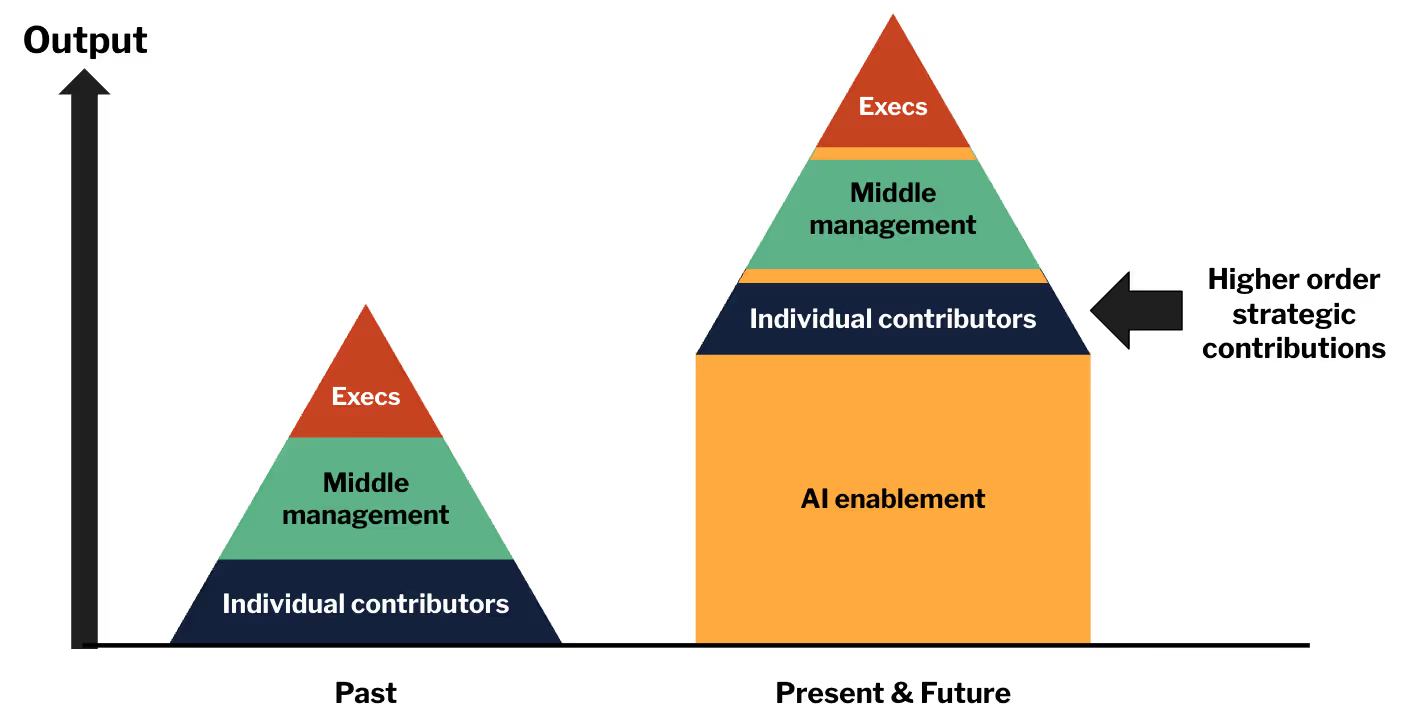
This bionic approach reshapes the workforce. For example, many software engineers now spend less time writing code and more time directing AI tools like Claude Code to develop features. As a result they’re acting more like managers of AI developers than individual contributors and can focus more of their time on strategic thinking contributions such as the product roadmap or overall architecture integration.
This shifts the traditional organizational pyramid into an obelisk. The number of people can stay the same, but with AI enablement, the total output increases massively. Individual contributors, once judged on volume, now make higher-order strategic contributions by directing AI.
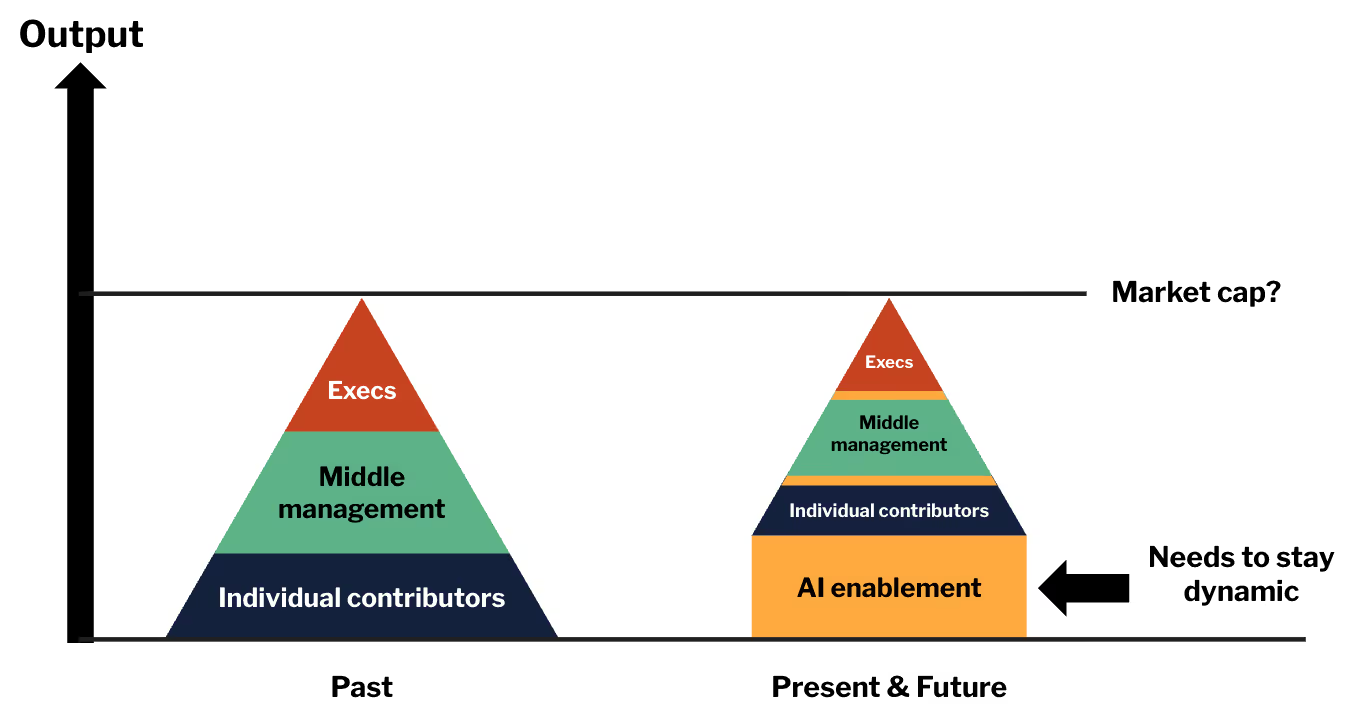
Many organizations are tempted to view AI primarily as a tool for efficiency and cost reduction. This approach focuses on identifying tasks currently performed by people and replacing them with AI capabilities to reduce headcount.
While this may look appealing on a spreadsheet by offering immediate cost savings, it is an inherently short-term and limited view. This mindset makes two dangerous assumptions:
Ultimately, this path may lead to a decrease in overall output. The initial savings are erased by the loss of dynamism and the inability to innovate, leaving the organization smaller and less capable than before.
The bionic approach champions a growth mindset. Instead of replacing people, it focuses on augmenting them. The goal isn't just to do the same work with fewer people; it's to do exponentially more work with the same number of people.
This is how the traditional organizational pyramid transforms into an obelisk. The human workforce size can remain constant, but AI enablement adds a massive new layer of productivity, dramatically increasing the organization's total output.
With this model, you can:
This is precisely what we're seeing from the most innovative tech startups today. They aren’t laying off their engineers; they are empowering them with AI to build more and innovate faster than ever before. This is the essence of becoming a bionic organization: using technology as a launchpad for growth, not just a tool for trimming the edges.
So, how do you begin this journey from theory to practice? This isn't just about buying new software; it's about leading a strategic transformation. Based on our experience at NorthGuide, Keyflow, and working with partners, we've developed a five-step framework.
Step 1: Start with Foundational Knowledge
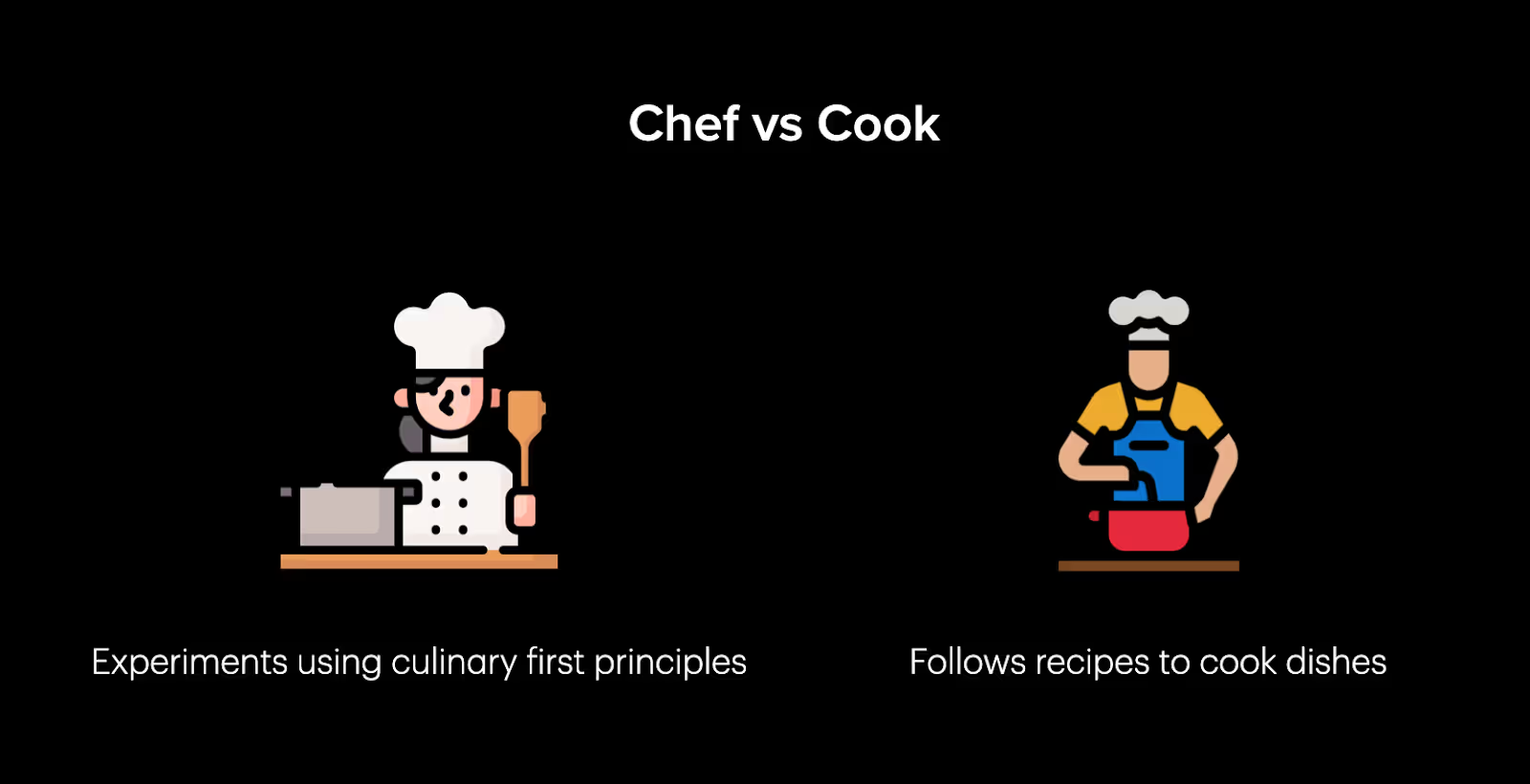
Empower all employees with a foundational understanding of how AI works. We start with foundational education because we want to train our teams to think as “chefs” rather than “cooks”.
Step 2: Build Internal AI Champions
AI adoption is as much a people challenge as a technology one. To succeed, you must understand and engage with the different mindsets in your organization.
Step 3: Rethink Workflows
True transformation requires moving beyond using AI as a simple 1-to-1 replacement for old tools. Swapping a Google search for a ChatGPT query is a start, but it only scratches the surface. To unlock real value, you must fundamentally re-examine how work gets done.
A powerful method is the "AI-First" challenge: for a set period, for any task you do on a computer, you must first try to have AI do it. This process of experimentation reveals two things:
Step 4: Follow a Ladder for Adoption
Bionic capabilities should be built from the ground up, not imposed from the top down. This "ladder of adoption" ensures that your AI systems are dynamic and grounded in real-world needs.
Rung 1: Individual Adoption. It begins with empowering individual employees with existing tools to solve their own problems and improve their personal workflows.
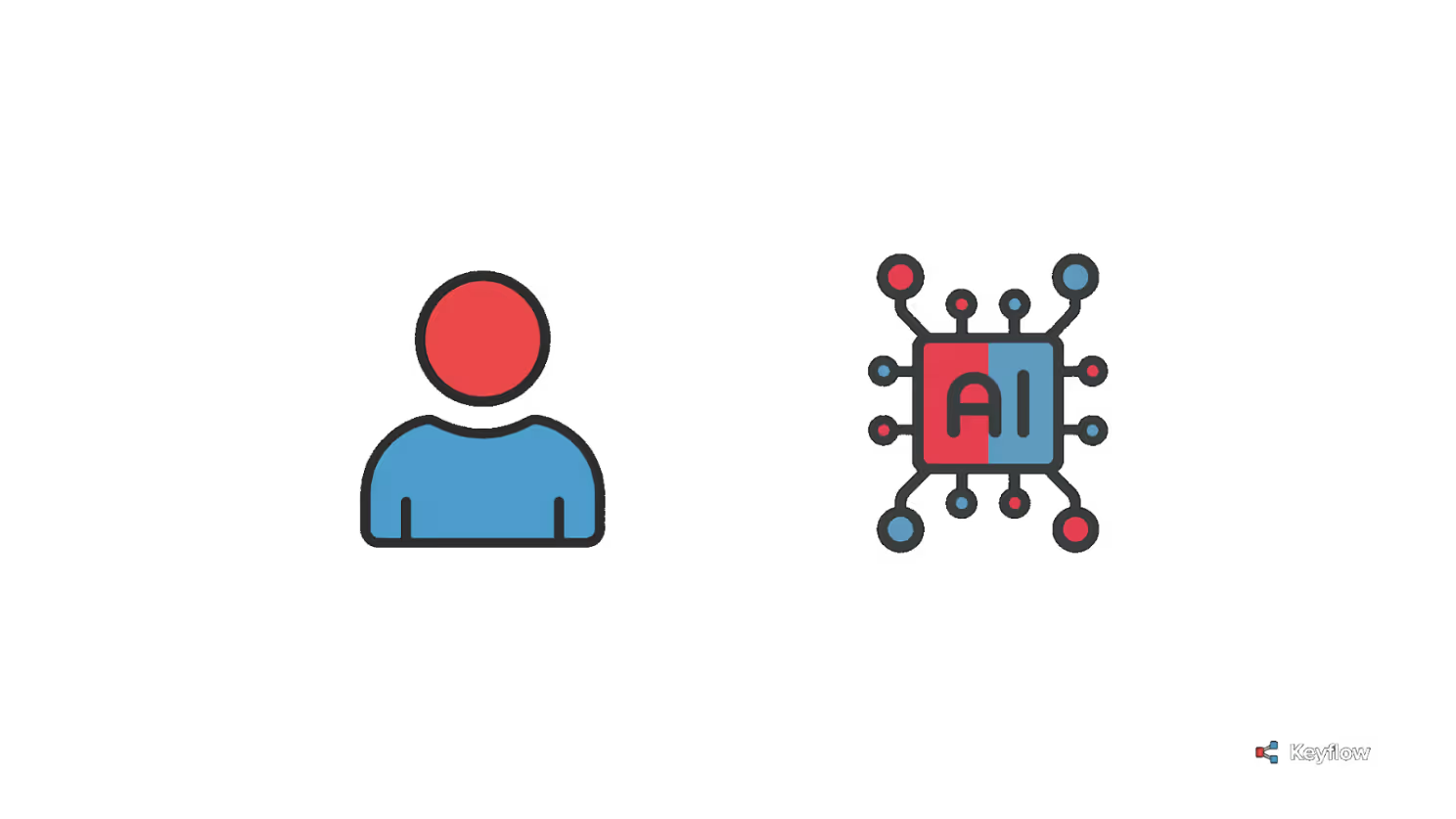
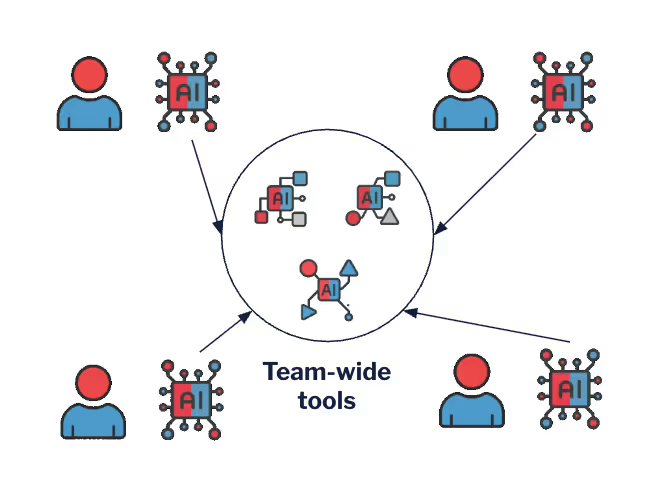
Rung 2: Team Integration. As an individual's tool or workflow proves successful, it gets shared and adopted by their team, evolving from a personal hack into an integrated team process.
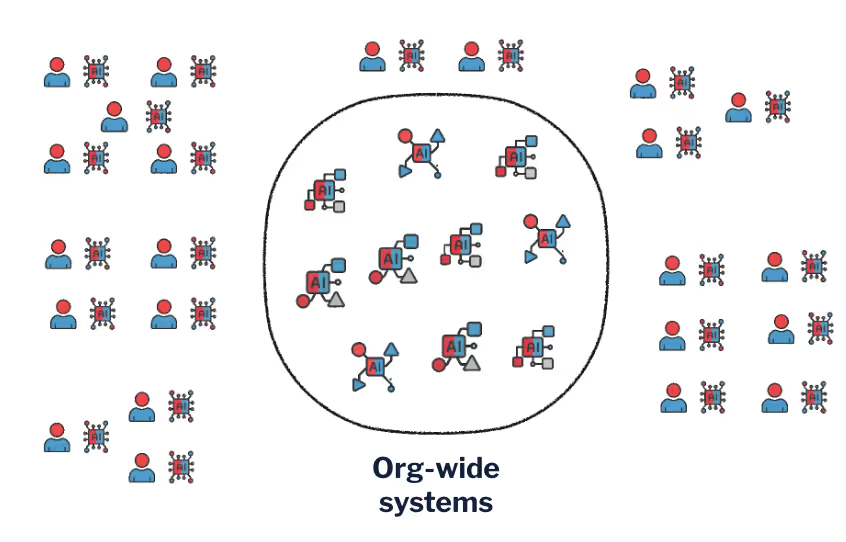
Rung 3: Organizational Systems. Finally, as different teams develop their own tools, they begin to connect them, creating powerful, organization-wide systems that deliver value across departments.
Step 5: Align Expectations and Values
Finally, and most critically, AI adoption must be guided by a clear set of principles. This is as much a culture change as it is a technological one. These values act as a compass to ensure AI is used responsibly and in a way that reinforces your company's identity. Some principles we’ve established at NorthGuide include:
We are in the midst of the next great shift, from knowledge work to AI-enabled work. The future isn't about replacing humans; it's about augmenting them. By embracing a bionic approach, we can empower our teams, rethink our workflows, and build organizations that are not only more productive today but are equipped to continuously learn and grow in an ever-changing world.
For more information or to discuss how NorthGuide and Keyflow can help your organization become “bionic”, please contact sarah@northguide.ca and millin@keyflow.space.